Introduction
The history of neural networks can be read as a shift in how we model the mind. This post translates and expands my original Spanish notes about that transition: from cognitivism, with explicit symbolic rules, to connectionism, with distributed learning systems inspired by neural behavior.
Two major models shape this debate:
- Cognitivism: mind as symbolic processing, similar to a program manipulating clear rules.
- Connectionism: mind as a distributed adaptive system where knowledge emerges from many interacting units.
The first offered precision and structure. The second offered flexibility and tolerance to ambiguity and error.
The Rise of Cognitivism
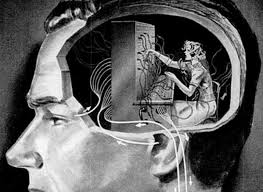
In the 1950s, cognitivism grew with the ambition to formalize thought. Mental activity was often described as symbol manipulation under explicit logical rules, very close to the architecture of early computing.
One landmark example is the General Problem Solver by Alan Newell and Herbert Simon, which represented reasoning through explicit rule systems. This approach had a strong initial impact but showed limitations in tasks such as:
- robust pattern recognition,
- ambiguous or noisy data processing,
- human-like tolerance for uncertainty.
The Birth of Connectionism
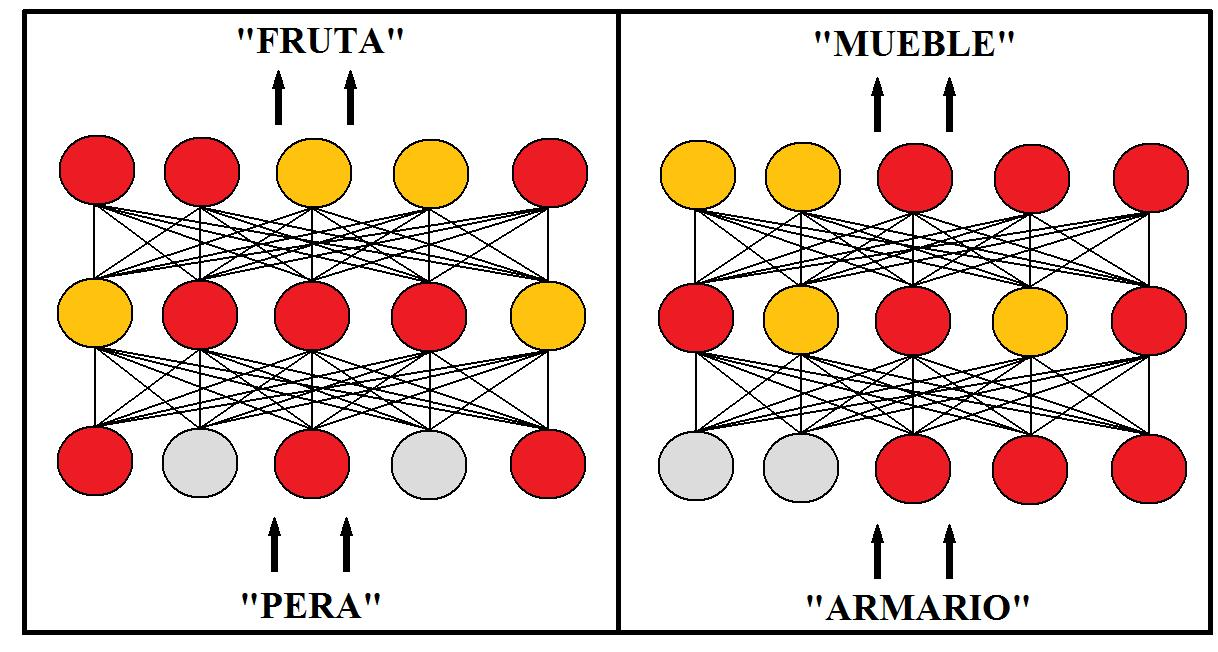
In the 1980s, connectionism reintroduced brain-inspired ideas into mainstream cognitive modeling. Instead of explicit symbolic programs, it framed cognition as interaction among many simple units connected in a network.
David Rumelhart and James McClelland, through Parallel Distributed Processing, helped establish this perspective and its practical learning mechanisms, especially backpropagation.
In this view, learning means adjusting connection strengths from error signals over repeated exposure.
Systematicity of Cognition: A Core Debate
Systematicity asks whether understanding one structured expression implies understanding related expressions. For example, if someone can process "Juan loves María," can they also process "María loves Juan"?
- Cognitivist answer: systematicity comes from reusable symbolic rules operating over explicit structure.
- Connectionist answer: systematic behavior can emerge from distributed learning when networks capture regularities in data across enough examples.
This remains a serious philosophical and technical discussion.
Key Differences at a Glance
Cognitivism
- clear symbolic representations and explicit rules,
- strong for formal reasoning and compositional logic.
Connectionism
- distributed adaptive representations,
- strong for perception, pattern recognition, and graded generalization.
Was the Shift Necessary?
The move toward connectionism reflected a need to model phenomena that strict symbolic systems struggled with. By allowing graded behavior, error tolerance, and statistical learning, connectionist methods opened the path to modern machine learning and deep learning.
Extra Context: Why This Matters Today
Modern AI systems still inherit this tension:
- Deep neural models excel at large-scale perception and representation learning.
- Symbolic methods still provide interpretability, explicit control, and compositional guarantees.
Because of this, many current research directions explore hybrid neuro-symbolic systems, aiming to combine the adaptability of connectionism with the structure of symbolic reasoning.
In other words, the old debate is not over—it evolved.
References
- Newell, A., Shaw, J. C., & Simon, H. A. (1959). Report on a General Problem-Solving Program. In Proceedings of the International Conference on Information Processing.
- Rumelhart, D. E., McClelland, J. L., & PDP Research Group. (1986). Parallel Distributed Processing: Explorations in the Microstructure of Cognition (Vols. 1–2). MIT Press.
- McClelland, J. L., Rumelhart, D. E., & PDP Research Group. (1986). The appeal of parallel distributed processing. In Parallel Distributed Processing (Vol. 1). MIT Press.
- Fodor, J. A., & Pylyshyn, Z. W. (1988). Connectionism and cognitive architecture: A critical analysis. Cognition, 28(1–2), 3–71.
- Smolensky, P. (1988). On the proper treatment of connectionism. Behavioral and Brain Sciences, 11(1), 1–23.